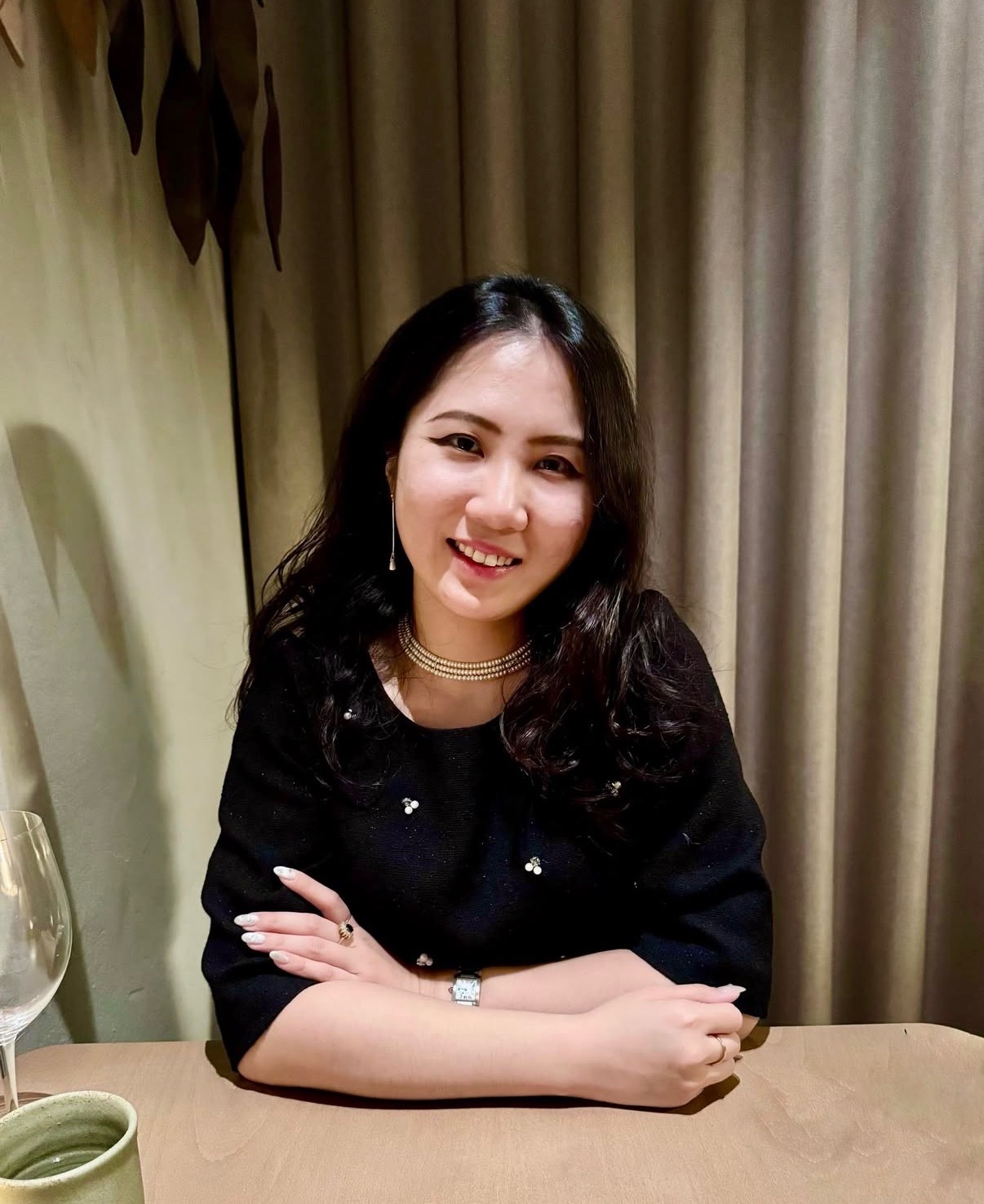
Some people talk about purpose in big, abstract ways.
Christine Lin talks about it like it’s something you live with every day…
When Christine Lin joined me on The Corey Podcast, I expected to talk about technology, AI, and nonprofit work. What I didn’t expect was to leave the conversation thinking so deeply about love, dignity, patience, and the quiet ways people show up for one another.
Before we even got into her work with the Eko Vision Foundation, Christine said something that immediately stopped me in my tracks.
She told me she works in what she calls the market of love.
And honestly, that one sentence explains everything.

Working in the Market of Love.
Christine has the credentials to work almost anywhere. She’s a clinical pharmacist, a public health professional, and deeply grounded in research and evidence-based decision making. But instead of choosing the most traditional or profitable path, she chose something more personal.
She chose to build a nonprofit rooted in family, lived experience, and care.
The Eko Vision Foundation is named after her grandmother, Eko, a woman who lost her sight to glaucoma but never lost her sense of self. Christine describes her grandmother as a princess. She still does her hair every week, gets her nails done, wears heels, lipstick, and makeup, and takes her time getting ready, even if the whole family has to wait.
That detail alone says everything about dignity.
Blindness Is Not Far Away.
One of the most grounding parts of our conversation was how Christine reframed blindness.
She reminded me that blindness isn’t rare, distant, or abstract. Blind people are everywhere. They’re working, teaching, leading, dating, dressing beautifully, and living full lives. It could happen to anyone through genetics, illness, or an accident.
What often stops people isn’t blindness itself, it’s the assumptions placed on it.
Christine was clear about this, blind people don’t need pity. They need access, respect, and technology that understands their real lives.

Technology That Leads With Privacy.
One of the most powerful moments in our conversation was when Christine explained why privacy is at the center of Eko Vision’s mission.
For sighted people, using AI is often a choice. You decide when to take a photo, what to upload, and what to ask. But for blind and low vision individuals, technology isn’t optional. It’s necessary.
That means privacy isn’t just important, it’s essential.
Christine talked about how AI tools often require uploading deeply personal information just to function. Medical bills, personal documents, everyday moments that most of us glance at without thinking. For someone who is blind, that information has to be processed externally, and that comes with risk.
Eko Vision prioritizes privacy-first technology because dignity doesn’t exist without safety.

Built by the Community, for the Community…
Something I loved learning is that many of the people working within the foundation are blind or low vision themselves. Christine shared a story about interviewing an intern without realizing she was blind until the conversation itself.
That’s the point.
The foundation isn’t guessing what people need. They are the community they serve.
From verbalizing everything in meetings to using larger fonts and stronger color contrast, these practices aren’t special accommodations. They’re thoughtful, inclusive habits that benefit everyone.
A Surprising Detail I Loved…
Here’s something Christine casually mentioned to me before we even hit record, and I’m still not over it.
She’s a licensed baker.
And she does it purely for fun.
No business plan. No side hustle. No “coming soon” announcement. Just baking because she enjoys it. I know, it blew me away too. I had to pause for a second like, wait, you’re changing lives and you can casually pull out laminated credentials for pastry?
It made me laugh, but it also made so much sense. Christine is someone who allows herself to create without pressure. She doesn’t need everything she touches to be productive or impressive. Some things can simply be joyful.
That detail stuck with me because it says a lot about how she moves through the world. Focused, curious, and grounded enough to know that not everything needs an audience.
Honestly, I respect it.
Slowing Down and Staying Grounded.
Running a nonprofit comes with pressure, and Christine didn’t shy away from that. She talked openly about anxiety, funding, waiting for grants, and learning to pace herself.
What keeps her grounded is a simple but powerful mindset, do a little every day, and don’t give up.
Not everything is controllable. Some things take time. And building something meaningful is a long game.
That perspective felt like a quiet exhale.
One Thing Christine Wants You to Try.
The One Thing Christine Wants You to Try
Toward the end of our conversation, Christine shared something that has stayed with me more than I expected.
She said, “Try being blind for just one hour.”
Not as a performance. Not as a social experiment you post about later. Just one quiet hour of moving through your own life without sight.
Make coffee. Walk through your home. Reach for your phone. Sit with your thoughts.
Christine explained that even a single hour has the power to open you up to what people who are blind or have low vision navigate every single day. The hesitation before reaching for something. The reliance on memory instead of visuals. The way familiar spaces suddenly feel uncertain.
It’s not about discomfort for the sake of it. It’s about awareness.
When you remove sight, even briefly, you start to understand how much of the world is designed with assumptions about ability. You realize how many small moments depend on systems working, on patience from others, on environments being thoughtfully built.
What Christine really wants people to understand is this: normalcy shouldn’t be a privilege.
Everyone deserves to move through the world feeling capable, included, and dignified. Accessibility isn’t about special treatment. It’s about allowing people to experience everyday life without barriers constantly reminding them of what’s missing.
That one-hour exercise isn’t meant to make you feel helpless. It’s meant to make you more human. More attentive. More compassionate.
And once you see the world differently, even for an hour, it’s hard not to carry that awareness with you.
Learn More and Support the Work:
If this conversation moved you the way it moved me, I encourage you to learn more about Christine and the incredible work she’s doing.
You can explore the Eko Vision Foundation, follow their journey, or make a donation by visiting
https://www.ekovisionfoundation.org/
This work is built on love, dignity, and the belief that everyone deserves to move through the world with confidence and care.
And honestly, that feels like a mission worth supporting.

Leave a Reply