

Today I’m writing about something that means a lot more to me than just a red carpet moment: the upcoming 2026 Met Gala, the history behind its evolution, and why knowing the origins of fashion culture matters, especially from a Black American viewpoint.
If you listened to The Corey Podcast episode — Met Gala 2025: A Celebration of Dandyism, Part 1 — you already know we started with elegance, rebellion, and Black brilliance. That conversation was only the beginning of what fashion is and what it can mean when we look beneath its surface.
The Return of Beyoncé and a New Era at the Met Gala

In late 2025, fashion and culture media lit up with the news that Beyoncé, Nicole Kidman, and Venus Williams will be co-chairs of the 2026 Met Gala, joining longtime figure Anna Wintour atop fashion’s biggest night. This marks Beyoncé’s return to the Met Gala stage for the first time in nearly a decade, an event that feels almost symbolic in itself.
Billboard, Vogue, Deadline, Rolling Stone, and other outlets covered the announcement with excitement, framing it as an infusion of star power into an institution that so often determines what matters in culture and style.
The 2026 Met Gala: What Comes Next
The confirmed 2026 co-chairs — Beyoncé, Nicole Kidman, and Venus Williams — reflect an intersection of music, cinema, sport, and cultural influence. Beyoncé’s return is more than fashion theater; it’s a reminder that Black cultural power has always been central to the evolution of style globally.
The theme tied to the Costume Institute’s “Costume Art” exhibition will explore the relationship between clothing and the body beneath a concept that resonates deeply when we think about how fashion has been used historically to affirm or deny presence, beauty, and worth.
But beyond glamour and headlines, this moment invites a deeper question: what does it mean when a Black woman who has reshaped contemporary culture returns to lead one of fashion’s most talked about nights?
When a Black woman who has reshaped contemporary culture steps onto the Met Gala stage as a leader, it’s more than just a headline, it’s a moment. It’s a statement that influence isn’t about fitting into the old guard, it’s about redefining what the guard even looks like. It’s about visibility, yes, but also authority, claiming space in rooms that historically haven’t seen you at the top. For me, it’s inspiring because it signals that culture, creativity, and leadership are no longer bound by outdated rules. It’s a reminder that the narratives we consume in fashion, in art, in media, are evolving, and the people shaping them are too. This isn’t just about a red carpet, it’s about who gets to write the story and who gets celebrated for doing it their way.
Why This Matters: History, Representation, and Cultural Memory
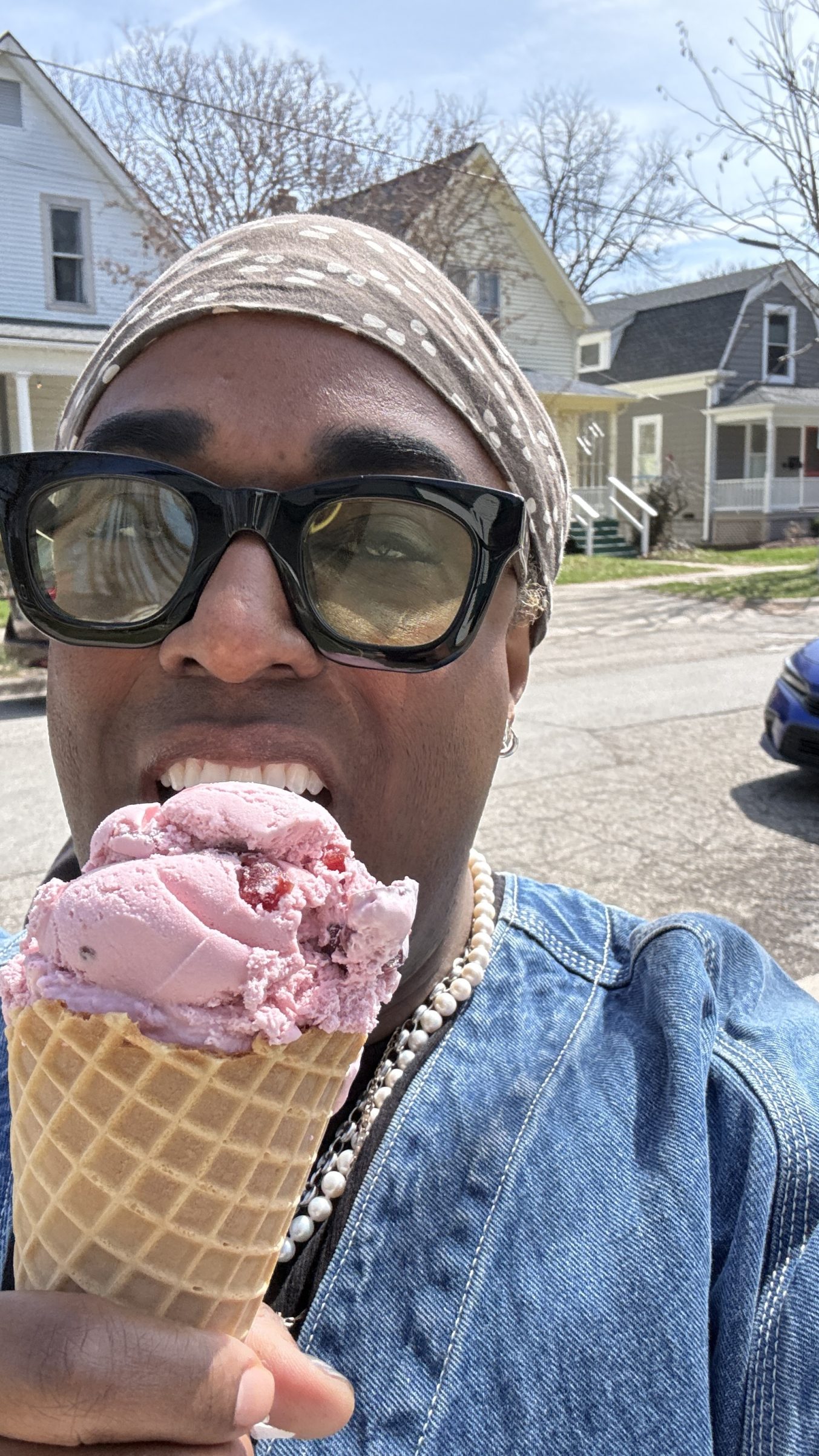
Fashion isn’t just clothes on bodies. It’s histories stitched into fabric. It’s who gets to stand front and center and whose work gets forgotten or sidelined. Here I am (pictured below), blonde locs, and a vintage forest green wool fedora, holding my prized pup Sadie, and I can’t help but think about what fashion has always meant to me. Growing up, it was more than just clothing, it was a way to speak without saying a word, to show the world who I was before I even had to explain it. My style sparked conversations, raised eyebrows, and inspired speculation, because I never followed the streamline, boring, or trendy path. I’ve always had a flare for the unexpected, for what felt alive and true to me. Fashion has always been my canvas, a way to express my inner spirit, my creativity, and my energy in a way that’s fun, fearless, and unapologetically me.


A Complicated Legacy

Take the legacy of André Leon Talley, one of the most influential figures in modern fashion. Talley was larger-than-life not only in stature but in presence, voice, and style. To him, dressing was autobiography, a way of declaring existence in spaces that never made Black bodies feel entirely welcome. His sense of self and outspoken personality helped shape decades of fashion dialogue.
This was showcased in Vogue’s “Superfine: Tailoring Black Style” exhibition, a cultural moment that finally highlighted Black dandyism: a tradition that fuses elegance, identity, and resistance. Anna Wintour herself wrote about Talley with admiration, noting his brilliance, confidence, and the joy he brought to fashion.
So when people ask why I think Anna Wintour finally paid dues to Talley, it’s not because she acknowledged his fame. It’s because fashion institutions are slowly recognizing that the stories we celebrate shape what the world sees as valuable.
Of course, the story between Talley and Wintour was not without tension. Talley experienced pay disparities and professional sidelining that reflected deeper issues within the industry.
Fashion history is filled with brilliant Black creators whose contributions were minimized or only partially acknowledged until late in life or after passing. Recognizing them isn’t just symbolic, it reshapes the narrative of fashion itself.
This is why I believe Anna’s emphasis on exhibitions like “Superfine” and the Met Gala’s evolving guest list aren’t random. They are breadcrumbs toward something larger: acknowledgment of Black contribution as essential, not peripheral.
This gala may very well be the grand return of Black fashion’s rightful visibility, curated on an institutional stage that once overlooked voices like Talley’s.
⸻
From the Podcast to the Page…
So now you’ve heard me talk about dandyism, and that’s just the beginning. Dandyism wasn’t trivial. For Black men like Talley and others, it was resistance, an assertion of dignity in a world that often denied it. Fashion was their language.
So when we see figures like Beyoncé and Venus Williams named as co-chairs — Black women whose bodies have historically been politicized, commodified, and celebrated… we are watching a shift. Not just in aesthetics, but in who gets to articulate what fashion means.
⸻
Conclusion: Reckoning With Style and History
The Met Gala is a cultural mirror. It reflects what the fashion industry wants the world to believe it values. This year, that reflection includes iconic Black voices and reminds us that fashion is never just about clothes.
As someone who cares about authenticity, history, and cultural resonance, I want to see acknowledgment turned into action. I want the narratives of Black creators and innovators not to be footnotes but center stage.
Fashion, at its best, is art. But it’s also identity, history, and power.
And this Met Gala might be the moment we stop asking why Black influence matters and start seeing clearly how much it always has.

Leave a Reply